

CoinGPT Scanner
Find trading opportunities before the crowd
Indicators
Trend
Candlestick
Patterns
Start Your Scan

Choose an indicator from the menu above to instantly scan all USDT markets.
Bullish Patterns
Bull Flag
A bull flag forms after a strong upward move, followed by a period of consolidation that
resembles a flag. The pattern indicates a pause in the uptrend before continuation. Enter
long positions when price breaks above the flag's upper trendline with increased volume.
🟢 BUY on breakout

Bull Flag
Continuation
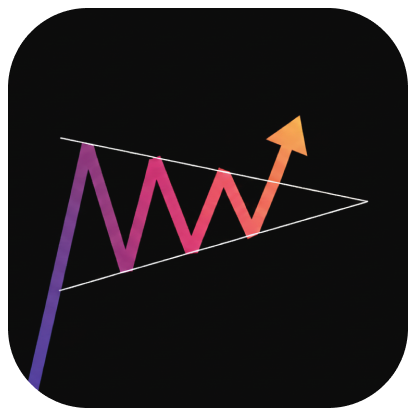
Bull Pennant
A bull pennant is a continuation pattern featuring converging trendlines after a strong
upward move. Unlike flags, pennants form triangular shapes as volatility decreases. A
breakout above the upper trendline signals the uptrend is likely to resume.
🟢 BUY on breakout
Bull Pennant
Continuation
Bullish Crab
The Crab is a harmonic pattern known for its extreme precision, with the final leg extending
to the 1.618 Fibonacci ratio. This deep correction often marks significant reversal points.
It offers high-reward trades when price reaches the potential reversal zone (PRZ).
🟢 Strong BUY at PRZ

Bullish Crab
Harmonic
Bullish Bat
The Bat pattern is a harmonic formation defined by specific Fibonacci ratios, with the final
point at 0.886 retracement. It's known for high accuracy in identifying reversal zones.
Traders enter at pattern completion with tight stop-losses below the X point.
🟢 BUY at completion

Bullish Bat
Harmonic
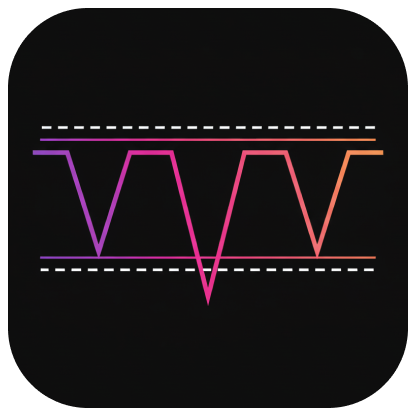
Inverse Head & Shoulders
The inverse H&S is a powerful bullish reversal pattern featuring three lows with the middle
being the deepest. It signals exhaustion of selling pressure and the start of a potential
uptrend. Entry is triggered when price breaks above the neckline connecting the two peaks.
🟢 BUY on neckline break
H&S Bottom
Reversal
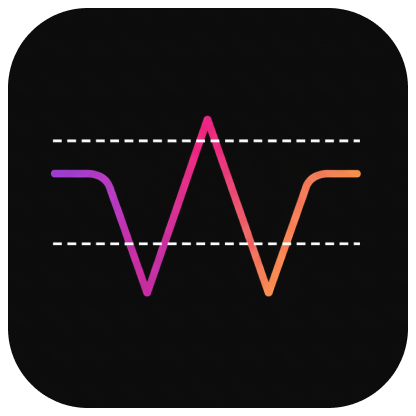
Double Bottom
A double bottom forms when price tests a support level twice, creating a W-shaped pattern.
This indicates strong buying interest at that level and often marks the end of a downtrend.
The pattern is confirmed when price breaks above the middle peak (neckline).
🟢 BUY on neckline break
Double Bottom
Reversal
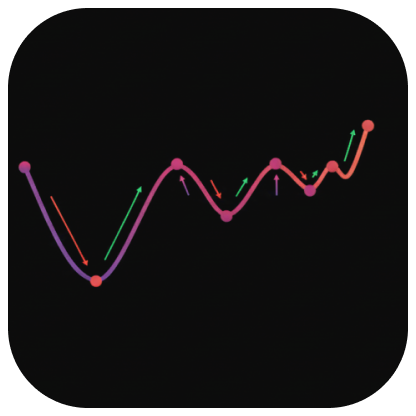
Bullish VCP
The Volatility Contraction Pattern (VCP) shows progressively tighter price swings,
indicating supply being absorbed. This pattern often precedes explosive breakouts as
volatility compresses. Enter when price breaks out with increased volume from the final
contraction.
🟢 BUY on volume breakout
Bullish VCP
Breakout
Bearish Patterns
Bear Flag
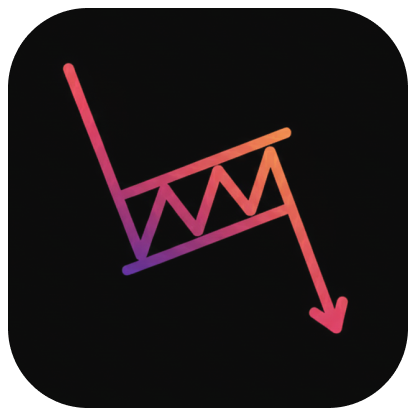
A bear flag forms after a sharp downward move, followed by a brief consolidation that slopes
slightly upward. This pattern suggests a pause before the downtrend continues. Enter short
positions when price breaks below the flag's lower boundary.
🔴 SELL on breakdown
Bear Flag
Continuation
Bear Pennant
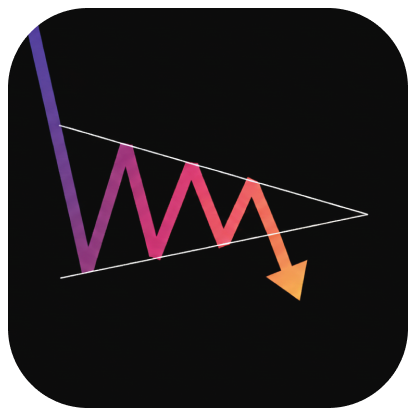
A bear pennant is a continuation pattern with converging trendlines forming after a strong
drop. The symmetrical triangle shape indicates decreasing volatility before the next leg
down. A breakdown below the lower trendline confirms the bearish continuation.
🔴 SELL on breakdown
Bear Pennant
Continuation
Bearish Crab
The bearish Crab harmonic pattern extends to the 1.618 Fibonacci level, marking potential
tops with high precision. This extreme extension often signals exhaustion of buying
pressure. Short positions at the potential reversal zone (PRZ) offer favorable risk-reward
setups.
🔴 Strong SELL at PRZ

Bearish Crab
Harmonic
Bearish Bat
The bearish Bat is a precise harmonic pattern with the final point at the 0.886 retracement
level, indicating a potential reversal zone. This pattern is valued for its accuracy in
identifying tops. Place short entries at completion with stop-losses above the X point.
🔴 SELL at completion

Bearish Bat
Harmonic
Head & Shoulders Top
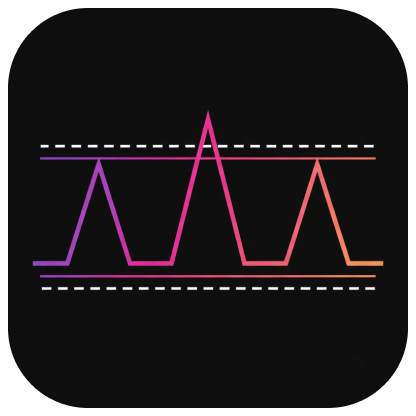
The H&S top is a classic reversal pattern with three peaks, the middle being the highest. It
signals exhaustion of buying pressure and potential trend reversal. The pattern confirms
when price breaks below the neckline connecting the two troughs.
🔴 SELL on neckline break
H&S Top
Reversal
Double Top
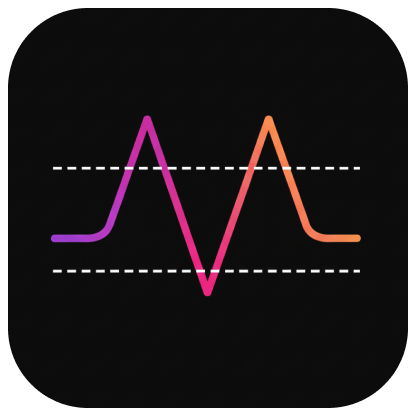
A double top forms when price tests a resistance level twice, creating an M-shaped pattern.
This indicates strong selling interest at that level and often marks the end of an uptrend.
The pattern confirms when price breaks below the valley between the two peaks.
🔴 SELL on neckline break
Double Top
Reversal
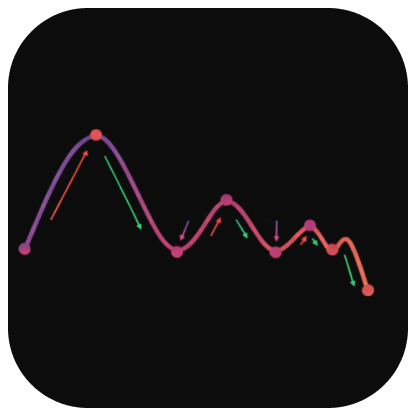
Bearish VCP
The bearish VCP shows progressively tighter rallies within a downtrend, indicating weakening
buying pressure. Each bounce becomes smaller as sellers maintain control. A breakdown below
support with increased volume confirms the continuation of the downtrend.
🔴 SELL on volume breakdown
Bearish VCP
Breakout
Bullish Candlesticks
Hammer Pattern
The Hammer is a single-candle reversal pattern with a small body at the top and a long lower
wick at least twice the body length. It forms after a downtrend, signaling that buyers
rejected lower prices. Wait for a bullish confirmation candle before entering.
🟢 BUY on confirmation

Hammer
Bullish
Bullish Engulfing
A bullish engulfing pattern occurs when a large green candle completely engulfs the body of
the previous red candle. This signals a shift from selling to buying pressure and is one of
the most reliable reversal patterns. Best results occur at key support levels after a
downtrend.
🟢 Strong BUY

Bullish Engulfing
Bullish
Morning Star
The Morning Star is a three-candle pattern: a large red candle, a small-bodied candle
(showing indecision), and a large green candle. It signals the transition from bearish to
bullish sentiment. This pattern is most reliable when the third candle closes above the
midpoint of the first.
🟢 Strong BUY

Morning Star
Bullish
Three White Soldiers
Three White Soldiers consists of three consecutive large green candles, each opening within
the previous body and closing near its high. This pattern indicates strong buying momentum
and often signals the start of a sustained uptrend. It's especially powerful after a period
of consolidation.
🟢 Strong BUY

3 White Soldiers
Bullish
Bearish Candlesticks
Shooting Star
The Shooting Star has a small body at the bottom with a long upper wick at least twice the
body length. Forming after an uptrend, it signals that buyers pushed prices higher but
sellers took control. Confirmation comes when the next candle closes below the shooting
star's body.
🔴 SELL on confirmation

Shooting Star
Bearish
Bearish Engulfing
A bearish engulfing pattern occurs when a large red candle completely engulfs the body of
the previous green candle. This signals a dramatic shift from buying to selling pressure and
is a strong reversal signal. Most effective when occurring at resistance levels after an
uptrend.
🔴 Strong SELL

Bearish Engulfing
Bearish
Evening Star
The Evening Star is a three-candle pattern: a large green candle, a small-bodied candle
(showing indecision), and a large red candle. It signals the transition from bullish to
bearish sentiment at the top of an uptrend. The deeper the third candle penetrates the
first, the stronger the signal.
🔴 Strong SELL

Evening Star
Bearish
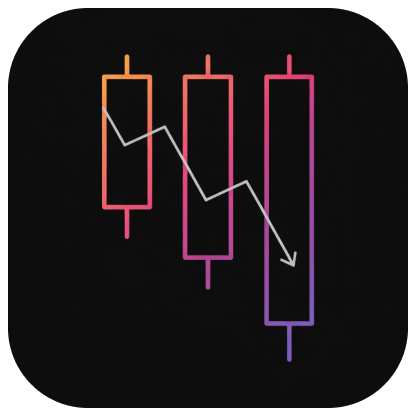
Three Black Crows
Three Black Crows consists of three consecutive large red candles, each opening within the
previous body and closing near its low. This pattern indicates strong selling momentum and
often marks the start of a sustained downtrend. It's a warning signal for holders to
consider exiting positions.
🔴 Strong SELL
3 Black Crows
Bearish
Neutral Patterns
Doji Pattern
A Doji forms when the opening and closing prices are nearly equal, creating a cross or plus
sign shape. It represents indecision between buyers and sellers in the market. When
appearing after a trend, it often signals a potential reversal—watch the next candle for
confirmation of direction.
🟢 Watch for reversal

Doji
Reversal
Bullish Indicators (Potential Buy)
RSI Oversold
The Relative Strength Index (RSI) measures momentum on a scale of 0-100. When RSI drops
below 30, it indicates the asset is oversold and may be due for a price bounce. This is
often used as a potential entry point for buyers looking to catch a reversal.
🟢 BUY Signal
Stochastic Oversold
The Stochastic Oscillator compares a closing price to its price range over a period.
Readings below 20 suggest the asset is oversold and selling pressure may be exhausted.
Traders often watch for the %K line crossing above %D as confirmation to enter long
positions.
🟢 BUY Signal
CCI Oversold
The Commodity Channel Index (CCI) measures an asset's deviation from its statistical mean.
When CCI falls below -100, it signals the price is significantly below average and may be
oversold. This often precedes a mean reversion bounce back toward typical price levels.
🟢 BUY Signal
Williams %R Oversold
Williams %R is a momentum indicator that measures overbought and oversold levels on a scale
of 0 to -100. Readings below -80 indicate the asset is in oversold territory. This suggests
strong selling pressure that may soon exhaust, creating potential buying opportunities.
🟢 BUY Signal
Bollinger Band Lower Touch
Bollinger Bands consist of a moving average with upper and lower bands based on standard
deviation. When price touches the lower band, it indicates the asset is trading at the lower
end of its recent range. This often serves as dynamic support and a potential reversal zone.
🟢 BUY Signal
Ultimate Oscillator Oversold
The Ultimate Oscillator combines short, medium, and long-term momentum into a single
indicator. Readings below 30 suggest the asset is oversold across multiple timeframes. This
multi-period approach helps reduce false signals and identify stronger reversal
opportunities.
🟢 BUY Signal
Bearish Indicators (Potential Sell)
RSI Overbought
When the Relative Strength Index rises above 70, it indicates the asset may be overbought
and due for a pullback. This suggests buying momentum is weakening and sellers may soon take
control. Traders often use this as a signal to take profits or consider short positions.
🔴 SELL Signal
Stochastic Overbought
Stochastic readings above 80 suggest the asset is trading near the top of its recent range
and may be overbought. This indicates buying pressure could be exhausted, with potential for
a price reversal lower. Watch for the %K crossing below %D for sell confirmation.
🔴 SELL Signal
CCI Overbought
When the Commodity Channel Index rises above +100, it signals the price is significantly
above its statistical average. This extreme reading suggests the asset may be overextended
and due for a correction back toward mean price levels. Consider reducing positions or
taking profits.
🔴 SELL Signal
Williams %R Overbought
Williams %R readings above -20 indicate the asset is in overbought territory, trading near
its recent highs. This suggests buying pressure may be exhausting and a pullback could be
imminent. This is often used as a signal to lock in profits or prepare for potential
reversal.
🔴 SELL Signal
Bollinger Band Upper Touch
When price touches the upper Bollinger Band, it indicates the asset is trading at the upper
end of its volatility range. This often acts as dynamic resistance and suggests short-term
overbought conditions. A move back toward the middle band often follows.
🔴 SELL Signal
Ultimate Oscillator Overbought
Ultimate Oscillator readings above 70 indicate overbought conditions across multiple
timeframes. This comprehensive signal suggests sustained buying pressure that may be nearing
exhaustion. The multi-period approach increases reliability for identifying potential
reversal points.
🔴 SELL Signal
Bullish Trend
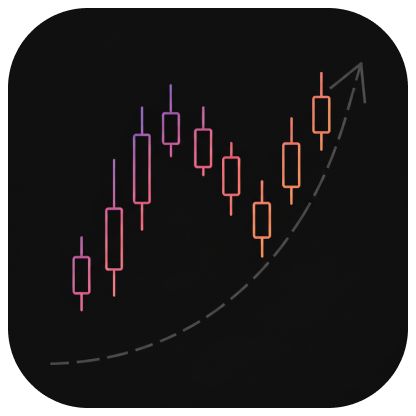
Bullish Breakout
A bullish breakout occurs when price decisively moves above a key resistance level with
increased volume. This signals strong buying pressure and often marks the beginning of a new
uptrend. Traders typically enter long positions on confirmed breakouts, setting stop-losses
below the broken resistance.
🟢 Strong BUY
Bullish Breakout
Breakout
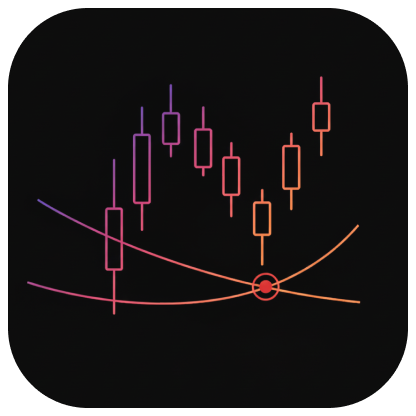
Golden Cross
The Golden Cross is a powerful bullish signal that occurs when the 50-day SMA crosses above
the 200-day SMA. This indicates a shift from bearish to bullish momentum over the longer
term. Historically, Golden Crosses have preceded significant uptrends in major assets.
🟢 Strong BUY
Golden Cross
Trend
MACD Bullish Crossover
A MACD bullish crossover happens when the MACD line crosses above the signal line,
indicating growing upward momentum. This is especially significant when it occurs below the
zero line, as it can signal the start of a trend reversal. Many traders use this as a
confirmation to enter long positions.
🟢 BUY

MACD Bullish
Momentum
Bearish Trend
Bearish Breakdown
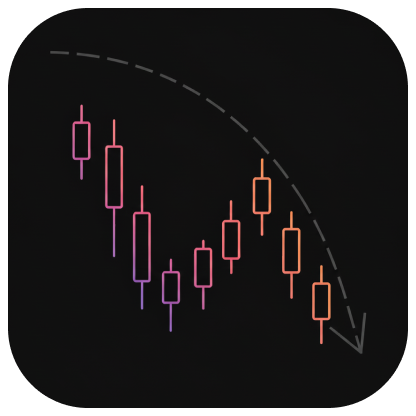
A bearish breakdown occurs when price breaks below a significant support level with
conviction. This signals increased selling pressure and often indicates the start of a
downtrend. Traders may consider short positions or exiting longs when price confirms below
support.
🔴 Strong SELL
Bearish Breakdown
Breakout
Death Cross
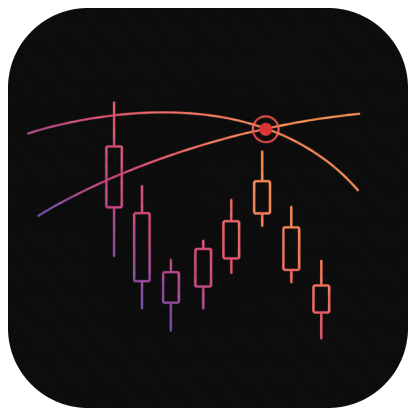
The Death Cross is a bearish signal that occurs when the 50-day SMA crosses below the
200-day SMA. This indicates a shift from bullish to bearish momentum and often precedes
extended downtrends. It's considered one of the most reliable long-term bearish indicators.
🔴 Strong SELL
Death Cross
Trend
MACD Bearish Crossover
A MACD bearish crossover occurs when the MACD line crosses below the signal line, indicating
weakening bullish momentum. This is especially powerful when it happens above the zero line,
suggesting the uptrend may be losing steam. Consider taking profits or preparing for
potential downside.
🔴 SELL

MACD Bearish
Momentum